
Views: 0 Author: Site Editor Publish Time: 2026-03-17 Origin: Site


A Key Switch Lock is more than a simple on-off control. It adds a clear layer of security by making sure access stays in the right hands. With the lock cylinder and electrical switch combined in one compact device, it helps prevent unauthorized use while keeping everyday operation easy and reliable. That is why Key Switch Locks are widely used in industrial control panels, security systems, commercial equipment, and a wide range of powered devices. In this guide, you will discover the main types of Key Switch Locks, how they work, what to look for when choosing one, and where they deliver the most practical value.
One of the main reasons this type of switch is used is simple: it puts control in the right hands. Instead of allowing anyone to press a button and power up a device, it requires the correct key before any action can happen. That extra step helps reduce accidental operation, discourages unauthorized use, and makes equipment access easier to manage. In settings where safety and responsibility matter, this kind of clear, physical authorization adds real everyday value.
Another advantage is how naturally it supports safer routines. A physical key is easy to issue, collect, and restrict to trained staff, which makes authorization more visible than a standard push switch or toggle. That visibility helps teams manage who can start, stop, or reset equipment without adding unnecessary complexity. The result is a smoother workflow, better accountability, and a more controlled operating environment, especially where important functions should not be left open to everyone.
This design is also widely used in electric mobility scooters and golf course vehicles because it offers a reliable balance of convenience and control. Users can quickly operate the equipment with the right key, while owners or managers gain a clearer way to prevent misuse or unwanted access. It keeps startup straightforward, supports routine management, and adds peace of mind in day-to-day use. For equipment that needs to stay easy to operate but harder to misuse, it remains a smart choice.
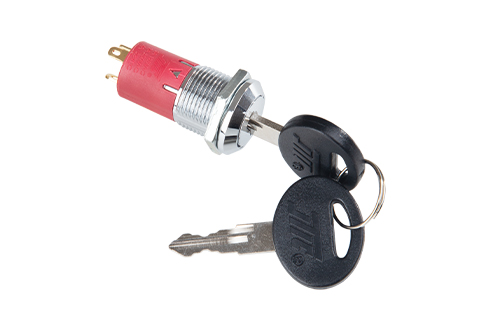
The way a key switch lock operates has a big effect on everyday use. Some designs are built for clear mode changes, while others focus on familiar handling or fast action. Comparing operation styles side by side makes it easier to see which type fits the job best.
Operation Style | How It Works | Best For | Main Advantage |
Rotary | Turns through fixed positions | OFF/ON control, RUN, SERVICE, mode selection | Clear position control |
Toggle | Flips between set states | Simple authorized switching | Familiar and direct feel |
Push-Button | Key unlocks a press action | Start, reset, trigger functions | Quick action with added security |
The key itself also shapes the way a switch performs in real-world use. Tubular keys often offer a stronger sense of security and are harder to tamper with. Flat keys are familiar, practical, and easy to handle in daily operation. Pin tumbler options sit comfortably in the middle, giving users a solid mix of protection and serviceability. This choice affects more than appearance. It can influence replacement, duplication, maintenance, and how easily a business manages access across multiple devices or systems.
Some key switch locks keep things simple, while others are built to do more. Single-position designs are straightforward and work well when the goal is basic start-stop or on-off control. Multi-position versions bring more flexibility by letting one switch handle several modes, such as OFF, AUTO, MANUAL, or SERVICE. That means fewer separate controls, a cleaner panel layout, and a more organized workflow. When equipment needs both security and smarter mode control, this type of design can make the whole interface feel more professional.
Performance starts with how the switch responds in real use. A maintained design stays in its selected position, which makes it a strong fit for steady power control or fixed operating modes. A momentary design, on the other hand, returns automatically after activation, making it ideal for quick actions such as start, reset, or pulse commands. One holds a function in place, while the other delivers a controlled signal and steps back. That difference has a big impact on how smooth, safe, and intuitive the equipment feels.
A switch may look simple from the outside, but key removal position can completely change how it performs in daily operation. Some designs allow the key to be removed only when the switch is in the OFF position, while others let it come out in multiple positions. That small detail affects operator habits, shutdown discipline, and how securely a system is left after use. In practice, the right pull position helps create better routines, supports clearer control procedures, and adds an extra layer of confidence to every operation.
What really defines performance is not just the key or the housing, but the electrical logic inside. SPST is built for straightforward open-close control and works well for simple switching tasks. SPDT adds more flexibility by directing one input between two outputs, while DPDT can manage two circuits at the same time for more advanced control needs. On the surface, these switches may seem similar, but their internal contact setup changes everything. Match the contact function to the job, and the whole system works smarter from the start.
The right match begins with a simple question: who should be able to use it? In many applications, performance is not only about switching power on and off. It is also about making sure control stays with the right people. A basic key system may be enough for routine equipment, while more restricted access works better where safety, supervision, or sensitive functions are involved. When access is matched correctly from the start, the switch does more than operate smoothly. It supports better control, stronger accountability, and more dependable day-to-day performance.
A good match should feel natural in actual use, not just look correct on paper. Mounting size, panel thickness, rear clearance, and operator reach all shape how well the switch fits into the equipment. Then come the performance details that matter even more: number of positions, return action, rotation angle, voltage, current, and contact type. When those elements line up with the application, installation becomes easier, operation feels cleaner, and the whole system responds with more confidence. That is when a switch starts to perform like it truly belongs there.
Even the right function can underperform if the build is wrong for the environment. Indoor applications may only need reliable everyday durability, but outdoor or harsh settings demand much more. Moisture, dust, corrosion, and temperature changes can all affect how well a switch performs over time. That is why material choice, sealing quality, and resistance to wear matter just as much as electrical specs. Match the switch to the environment, and it will last longer, require less attention, and deliver the kind of steady performance that users actually notice.
In industrial settings, Key Switch Lock systems are often used where control needs to be deliberate, not casual. Whether installed in machinery, control panels, or power systems, they help manage startup, shutdown, isolation, and mode switching with greater discipline. That added key step reduces the chance of accidental operation and keeps important functions in the right hands. For workplaces that care about safety, efficiency, and organized procedures, this is a compact but powerful way to make equipment control feel more secure and more professional.
Commercial spaces depend on order, and this is exactly where Key Switch Lock systems shine. They are commonly used in elevators, alarm panels, shutters, gates, and other restricted control points to protect functions that should not be open to everyone. Instead of relying on complicated rules, they create a simple and effective standard: no key, no action. That makes resets, overrides, and service functions much easier to control, while still keeping daily operation smooth for authorized staff. For building managers, it is a practical upgrade that adds clarity without adding hassle.
Some environments leave almost no room for mistakes, which is why Key Switch Lock systems are also widely used in medical equipment, telecom systems, server areas, and facility infrastructure. In these applications, they help protect service modes, panel functions, and restricted operations without making access difficult for trained personnel. Their value goes beyond preventing misuse. They also bring a more stable, consistent, and dependable way to manage critical controls. In places where uptime matters and disruptions can be costly, that kind of reliability makes a real difference.
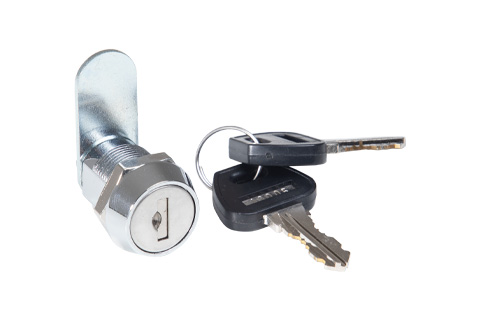
When choosing a key switch lock, materials deserve more attention than looks. The right combination affects durability, corrosion resistance, and long-term reliability. A quick material check can help you spot which options are suitable for protected indoor panels and which are better built for harsher, higher-use environments.
Part / Material Focus | What to Check | Why It Matters | Best Fit |
Housing | Plastic or metal body quality | Affects strength, insulation, and overall durability | Indoor panels, general equipment |
Lock Cylinder | Brass, plated brass, or stainless steel | Determines wear resistance and resistance to corrosion | Frequent-use or exposed applications |
Contacts | Conductive metal quality and stability | Impacts switching reliability and electrical performance | Daily operation, repeated switching |
Surface Finish | Protective plating or treatment | Helps reduce rust, wear, and surface damage | Damp, dusty, or demanding settings |
Overall Build | Material matching across all parts | Improves long-term smoothness and reduces maintenance issues | Any application needing dependable service |
A key switch lock may look fine on the panel, but real value shows up when the environment becomes challenging. If the application involves dust, moisture, outdoor exposure, or frequent operation, protection ratings deserve close attention. A suitable IP rating can tell you a lot about how well the switch is built for practical use. Beyond that, overall structural strength, contact stability, and long-term consistency also matter. The best choice is not simply the one that fits. It is the one that keeps working confidently when conditions stop being ideal.
Many buyers focus only on the switch itself, but the keying setup can make just as much difference in daily use. Keyed alike may be easier for shared operation, while keyed different gives stronger individual control. Restricted key options add another layer of security when access needs to stay tightly managed. Each approach changes how the system is used, maintained, and expanded over time. Thinking about key management before purchase can prevent a lot of frustration later. Get it right early, and the whole setup becomes easier to control, organize, and live with.
A well-chosen Key Switch Lock does far more than open or close a circuit. It helps control access, supports safer operation, and protects equipment across industrial, commercial, and electric mobility applications. By looking closely at type, function, material, and protection level, buyers can make smarter decisions with greater confidence. Jin Tay Industries Co., Ltd. combines dependable Key Switch Lock solutions with thoughtful design and responsive manufacturing support, helping customers find the right fit for a wide range of real-world needs.
A: It controls access by requiring the correct key before a function can be activated.
A: It helps prevent unauthorized use, reduces accidental operation, and improves safety.
A: Common types include rotary, toggle, push-button, single-position, and multi-position designs.
A: They are widely used in control panels, alarms, elevators, medical equipment, and electric mobility scooters.
A: Focus on type, contacts, materials, IP rating, and keying options for the best fit.


