
Hot Keywords:
- All
- Product Name
- Product Keyword
- Product Model
- Product Summary
- Product Description
- Multi Field Search
Views: 0 Author: Site Editor Publish Time: 2025-10-10 Origin: Site
If you’ve ever faced a situation where a key won’t turn or seems stuck in a Key Switch Lock,you’re not alone. This common issue can occur in industrial control panels, machinery, power equipment, and electronic systems.
Understanding why a key gets stuck, how a key switch lock works, and how to prevent jams can save time, reduce stress, and avoid costly downtime. This article provides a comprehensive guide to industrial Key Switch Locks, their mechanics, common issues, troubleshooting tips, and maintenance strategies, highlighting solutions from Jin Tay Industries Co., Ltd.
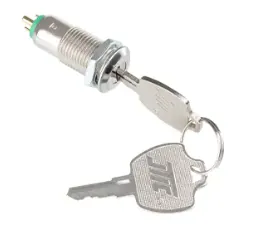
A Key Switch Lock is a mechanical and electrical device designed to control access and switch circuits. It combines secure key-operated access with precise electrical control. Key switch locks are widely used in:
Industrial control panels and electrical cabinets
Power distribution and machinery systems
Communication and monitoring devices
Security and access control systems
The key provides physical authentication, ensuring that only authorized personnel can operate equipment or electrical circuits. Industrial key switch locks are purpose-built for high durability, accurate switching control, and stable performance in demanding operating environments.
Lock Cylinder – Houses pins or wafers aligned to a specific key pattern. Only the correct key allows rotation.
Electrical Contacts – Complete or interrupt a circuit when the key is turned. Multiple terminal configurations are available for different applications.
Cam or Switching Mechanism – Translates key rotation into controlled mechanical movement or electrical contact engagement.
Housing – Typically made from zinc alloy or brass, often nickel-plated for corrosion resistance. Some models include dust, waterproof, or vibration-resistant protection.
High-quality key switch locks, like those from Jin Tay, ensure smooth operation, minimal friction, and long-term reliability.
Even robust key switch locks can experience issues. Here are the most common reasons your key may get stuck:
Dust and Debris Accumulation – Dust, metal particles, or other debris in the keyway can obstruct smooth rotation.
Moisture or Corrosion – Exposure to humidity or water can oxidize internal components, increasing friction.
Worn or Damaged Key – Repeated use may wear down the key’s edges, misaligning it with the lock pins.
Mechanical Wear – Over time, springs, cams, or pins may degrade, especially in high-cycle applications.
Improper Use – Excessive force or turning the key beyond its designed positions can damage the mechanism.
By identifying these causes early, you can prevent long-term damage and avoid operational disruptions.
Follow these steps when dealing with a stuck key in industrial key switch locks:
Avoid Excessive Torque – Do not over-rotate the key. Excessive torque may damage the key and the internal detent mechanism.
Inspect the Keyway – Clean dust or debris using compressed air or a soft brush.
Test a Spare Key – Determine if the key itself is worn or damaged.
Check Environmental Factors – Ensure the lock isn’t exposed to excessive moisture or vibration.
Call a Technician – If problems persist, contact a qualified professional to inspect and replace worn components.
These steps maintain operational safety and protect both the lock and the connected electrical system.
Regular maintenance ensures smooth operation and extends the lifespan of key switch locks:
Keep Locks Clean – Remove dust, dirt, or metal particles from the keyway and housing.
Select Protective Models – Use dust-resistant or waterproof locks in harsh environments.
Inspect Keys Regularly – Replace bent, worn, or damaged keys promptly.
Avoid Excessive Force – Rotate keys only within their intended range.
Schedule Routine Inspections – Periodically check the mechanical and electrical components of your locks.
Jin Tay offers industrial key switch locks engineered for durability and reliability:
ISO-Certified Manufacturing – Ensures consistent quality and adherence to international standards.
Durable Materials – Zinc alloy or brass construction with nickel plating for corrosion resistance.
Smooth Operation – Precision tolerance minimizes friction and wear.
Environmental Protection – Optional dust-proof, waterproof, and vibration-resistant designs.
Customizable Options – Key coding, terminal configuration, and panel size can be tailored for OEM projects.
These features make Jin Tay key switch locks ideal for control panels, machinery, electronic devices, and security systems.
Symptom | Possible Cause | Solution |
Key hard to turn | Dust or debris | Clean keyway; apply dry lubricant |
Key sticks | Corrosion | Select waterproof model; replace damaged parts |
Electrical contact fails | Terminal misalignment | Check wiring; tighten connections |
Rough rotation | Mechanical wear | Inspect or replace lock |
Key cannot be removed | Worn key | Use spare key; replace lock if necessary |
Q1: Can a key switch lock prevent unauthorized operation?
Yes. The key mechanism ensures that only authorized personnel can activate or deactivate circuits or equipment.
Q2: Are Jin Tay key switch locks suitable for harsh environments?
Yes. Dust-proof, waterproof, and vibration-resistant models are available for industrial applications.
Q3: Can key switch locks be customized?
Absolutely. Jin Tay offers custom key codes, terminal arrangements, and panel integration for OEM projects.
Q4: How often should a key switch lock be inspected?
Periodic inspections every 12–18 months are recommended, or more frequently in high-use environments.
Q5: What materials are used in Jin Tay key switch locks?
Locks are made from zinc alloy or brass, often nickel-plated, providing corrosion resistance and durability.
A stuck key doesn’t have to disrupt your operations. Key Switch Locks provide secure, reliable switching for control panels, machinery, and electrical systems. By maintaining cleanliness, choosing protective models, and inspecting keys regularly, you can ensure smooth operation and long-term reliability.
With over 40 years of experience, Jin Tay delivers precision-engineered key switch locks that combine durability, security, and customization for industrial applications worldwide.
For high-quality, reliable key switch locks, visit Jin Tay and explore their full range of industrial solutions.


